This advice is sourced from Dr Ros Taylor a senior palliative physician
Q. What are the main causes of nauses and vomiting?
A. The main causes are medications (e.g. painkillers), chemical imbalance (e.g high calcium in the blood), bowel causes (such as constipation or partial blockage of the bowel), motion sickness (e.g travel or ear infection).
Q. How can help my nausea at home before trying medication?
A. Nausea and vomiting are common and distressing symptoms. There are several different techniques that might help:
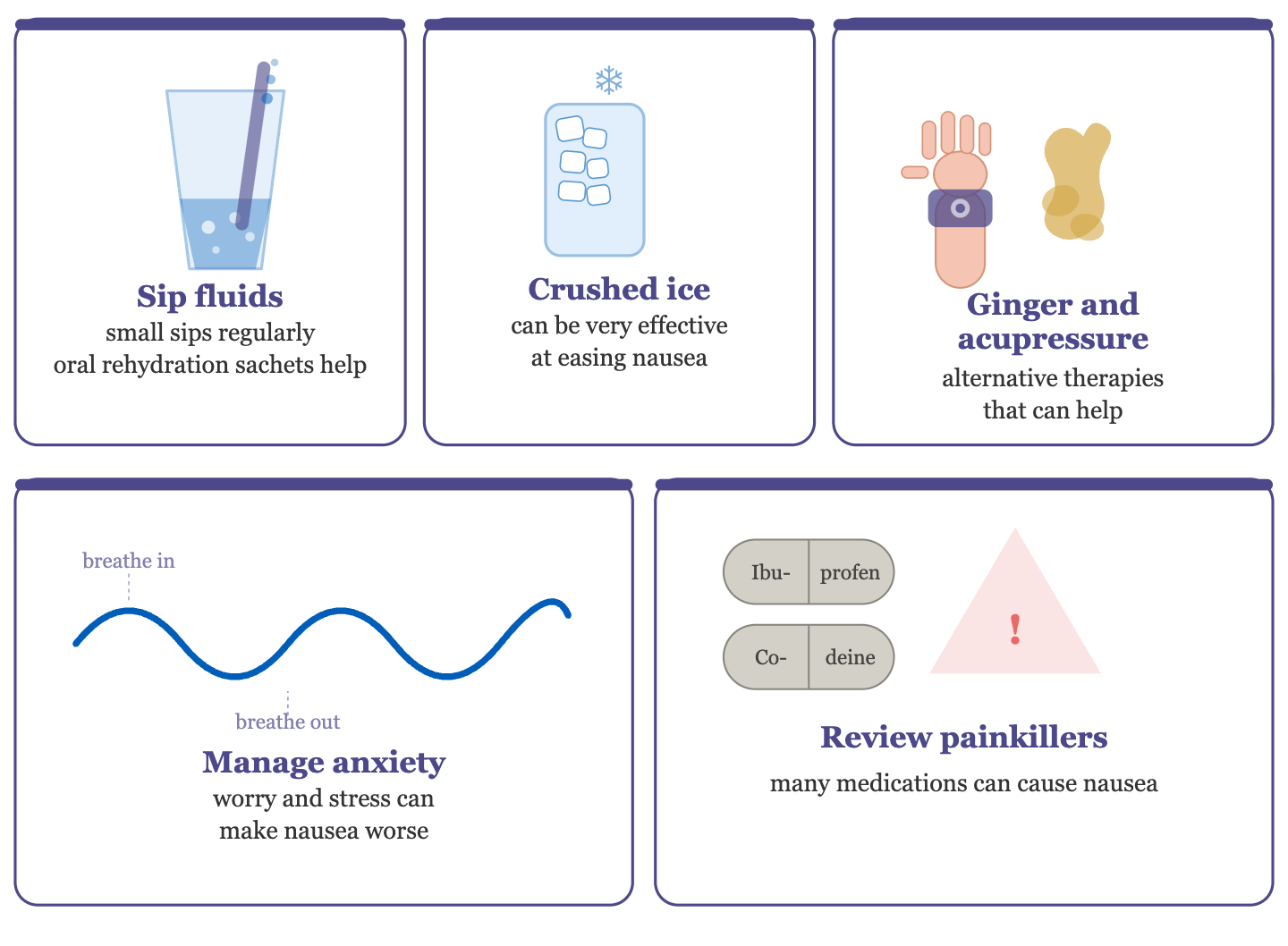
- Keep well hydrated as dehydration makes nausea worse (small sips regularly are easier)
- Water is fine to drink but oral rehydration sachets (e.g. Diarolyte) will help to keep the salts in your blood balanced
- If you are vomiting then the best time to have a small drink or snack is immediately after vomiting when your stomach is empty. That is also a good time to take any urgent medication
- Eating crushed ice can be very effective at stopping you feeling sick
- Good oral hygiene is important
- Treating constipation is key
- Alternative therapies that may help include ginger and acupressure bands
- Managing anxiety as feeling worried, stressed or anxious can make nausea and vomiting worse
- Consider reviewing your painkillers with your medical team as some of these may be causing the nausea e.g. codeine or anti-inflammatories such as ibuprofen
Q. When should I seek medical help?
A. If nausea is not settling after 48 hours advice should be sought as there may be a simple solution or some medication that may help. Other indications for seeking medical help are:
- If there are other symptoms such as drowsiness or confusion then a chemical cause may be suspected and blood tests will be needed
- If vomiting is severe seek advice earlier as dehydration is a risk
- Partial bowel obstruction is a rare cause of persistent nausea in advanced illness (please see information on the related article)