What is oedema?
Oedema is the medical word for swelling caused by fluid building up under the skin. It most often affects the legs and ankles, but can also affect the arms, back, or stomach- especially if you spend a lot of time lying down.
Your body normally keeps fluid moving through your tissues in a careful balance. When illness disrupts this balance, fluid can collect and cause swelling.
What does it look and feel like?
Puffy, swollen or shiny skin
Heaviness, aching, or stiffness especially in the legs
Pitting -pressing on the skin leaves a dent that takes time to disappear
When fluids collect in the abdominal cavity this is called ascites
In severe cases fluid may weep or leak through the skin
Why does it happen?
There are several reasons oedema can develop during a serious illness:
-
The illness itself — heart, kidney, or liver problems can affect the fluid balance in the body.
-
Some medicines, including steroids and anti-inflammatory painkillers (e.g. ibuprofen, naproxen)
-
Spending long periods of time in bed or in a chair
-
Low protein levels in the blood
What can help?
-
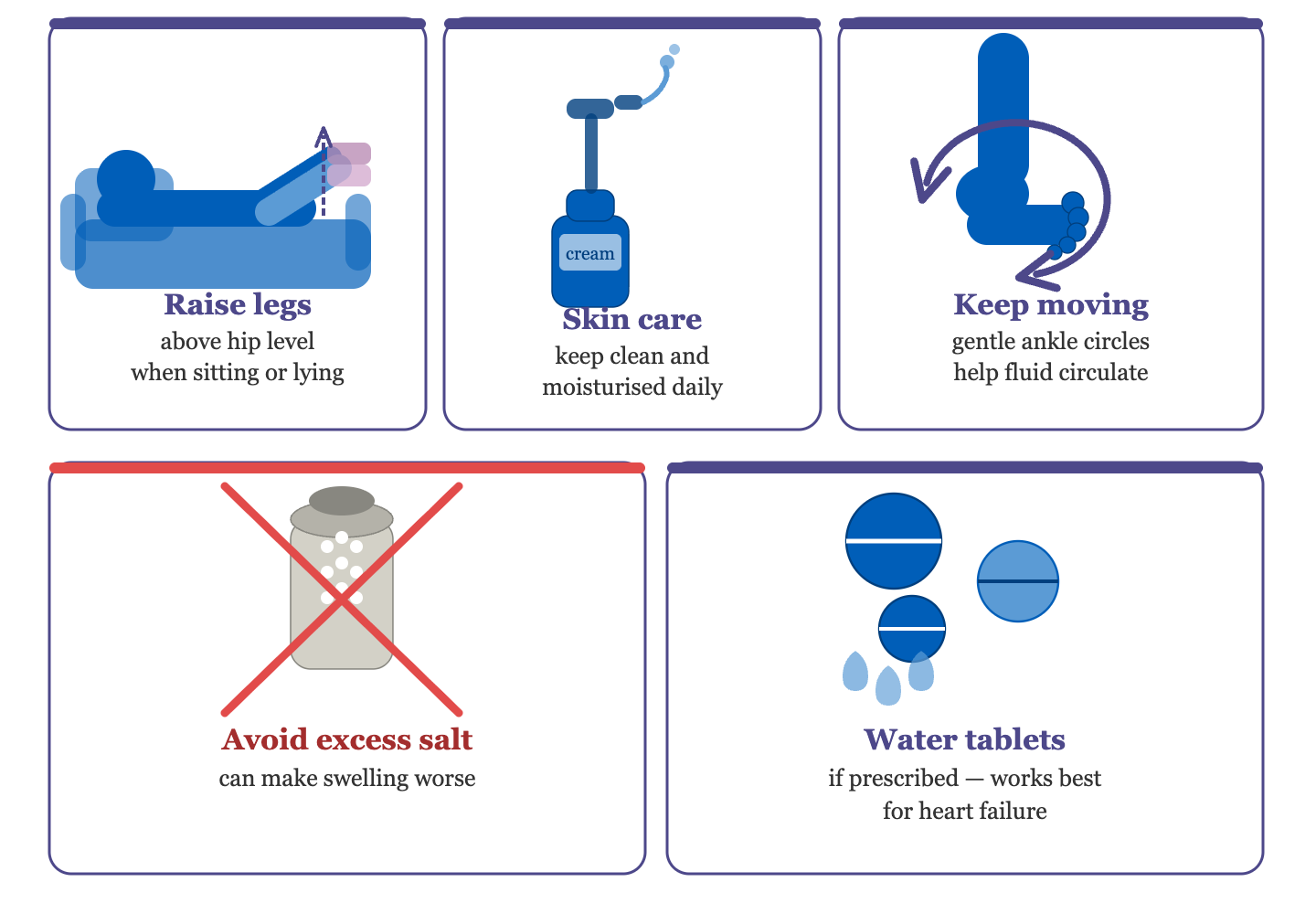
Raising legs above hip level when sitting or lying can reduce swelling and ease discomfort
-
Keep moving gently - even small movements and gentle exercise can help fluid circulate
-
Skin care - Swollen skin is fragile. Keep it clean and moisturised, and avoid tight clothing or anything that cuts in
-
Water tablets (diuretics) are sometimes tried by a doctor to help the body get rid of excess fluid. This depends on the cause of the swelling. Swelling due to heart failure will respond to diuretics whereas other causes e.g. due to immobility may not respond.
-
Fluid collecting in the abdomen (ascites) or around the lung (pleural effusion) can easily be drained as an outpatient
- Compression bandaging may help comfort and reduce weeping legs. This is done by district nurses
What is Lymphoedema?
Lymphoedema is a specific type of swelling caused by damage or blockage to the lymphatic drainage system itself often due to cancer affecting lymph nodes. Lymphoedema doesn't fluctuate (change) with position or medication in the same way as general oedema and it is managed differently. For more information on lymphoedema click here