Oedema (swelling): Information for patients and carers

What is oedema?

Oedema is the medical word for swelling caused by fluid building up under the skin. It most often affects the legs and ankles, but can also affect the arms, back, or stomach- especially if you spend a lot of time lying down.

Your body normally keeps fluid moving through your tissues in a careful balance. When illness disrupts this balance, fluid can collect and cause swelling.

What does it look and feel like?

Puffy, swollen or shiny skin 

Heaviness, aching, or stiffness especially in the legs

Pitting -pressing on the skin leaves a dent that takes time to disappear

When fluids collect in the abdominal cavity this is called ascites 

In severe cases fluid may weep or leak through the skin

Why does it happen?

There are several reasons oedema can develop during a serious illness:

  • The illness itself — heart, kidney, or liver problems can affect the fluid balance in the body. 

  • Some medicines, including steroids and anti-inflammatory painkillers (e.g. ibuprofen, naproxen)

  • Spending long periods of time in bed or in a chair

  • Low protein levels in the blood

What can help?
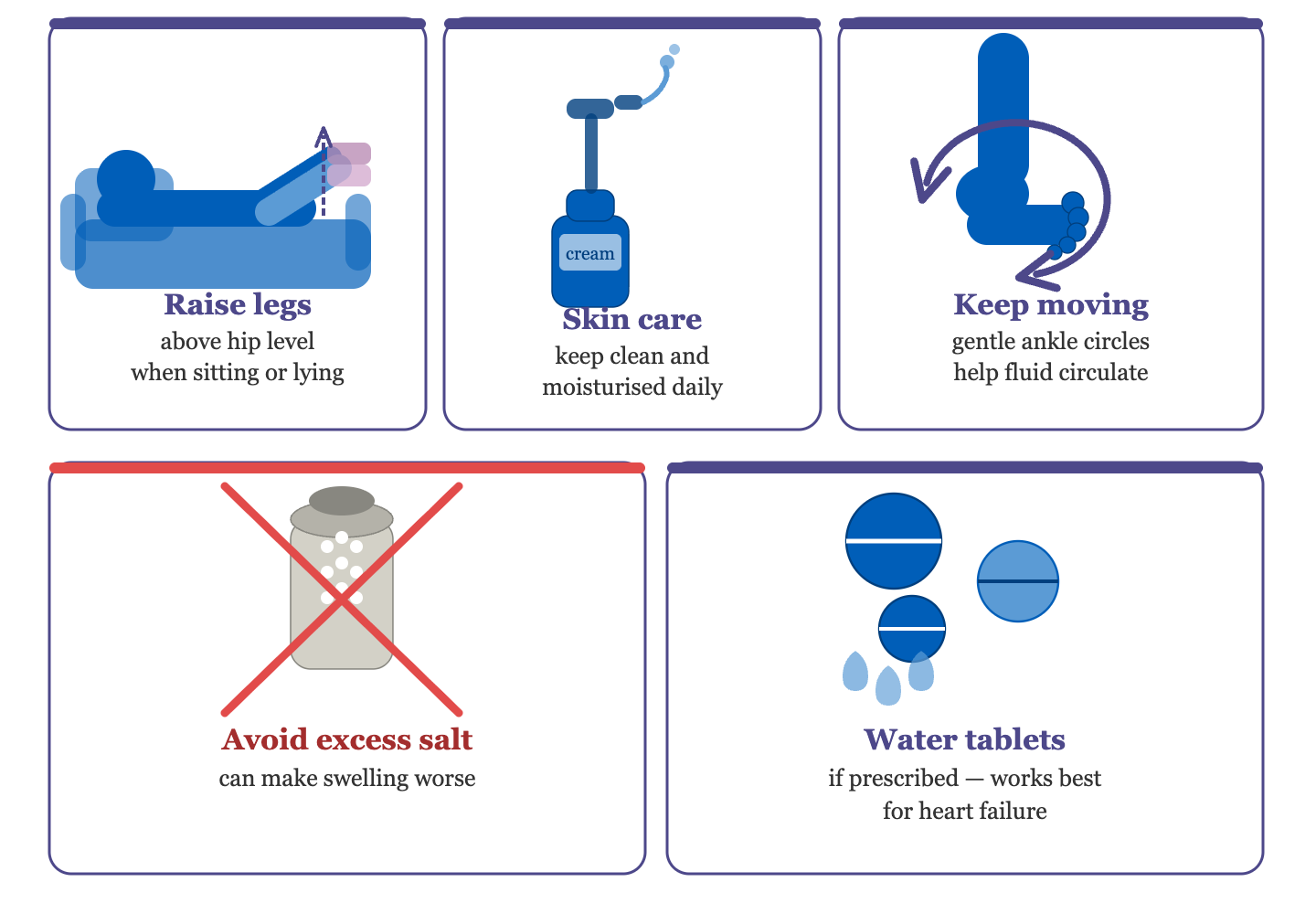
  • Raising legs above hip level when sitting or lying can reduce swelling and ease discomfort

  • Keep moving gently - even small movements and gentle exercise can help fluid circulate

  • Skin care - Swollen skin is fragile. Keep it clean and moisturised, and avoid tight clothing or anything that cuts in

  • Water tablets (diuretics) are sometimes tried by a doctor to help the body get rid of excess fluid. This depends on the cause of the swelling. Swelling due to heart failure will respond to diuretics whereas other causes e.g. due to immobility may not respond.

  • Fluid collecting in the abdomen (ascites) or around the lung (pleural effusion) can easily be drained as an outpatient

  • Compression bandaging may help comfort and reduce weeping legs. This is done by district nurses
What is Lymphoedema?

Lymphoedema is a specific type of swelling caused by damage or blockage to the lymphatic drainage system itself often due to cancer affecting lymph nodes. Lymphoedema doesn't fluctuate (change) with position or medication in the same way as general oedema and it is managed differently. For more information on lymphoedema click here
mceclip0.png

Share

Related Services

Palliative care teams

24 hour Helpline Pall24 for North Brent and Harrow
Close

24 hour Helpline Pall24 for North Brent and Harrow

T. 03000 200 224

This service was formerly known as Single Point of Access (SPA)

This is a 24 hour 7 days a week helpline providing advice for patients, families and professionals, hosted by St Luke's Hospice for residents of Harrow and North Brent.

Urgent rapid response visits can be made to patients registered with a Harrow GP


Harrow Community Palliative Care
Close

Harrow Community Palliative Care

T. 020 8102 6163

Harrow Community Specialist Palliative Care Team (LNWHT) provides advice and visiting to palliative care patients in Harrow.

They can be contacted Monday to Friday 8.30am to 4.30pm.

They are based at Honeypot Lane Health Centre, 839 Honeypot Lane, HA7 1AT.

Out of Hours the Pall24 Helpline can be used 3000 200 224

Referral form for clinician use only.

Community Specialist Palliative Care Referral Form V4.2 (DOCX)
St Luke's Hospice at Home
Close

St Luke's Hospice at Home

T. 0208 382 8020 / 8050

St. Lukes Hospice@Home provides palliative care services to the residents of North Brent and Harrow. Respite and bridging packages of care are available for end of life patients.

Please contact the team between Monday to Saturday 9.00am to 5.00pm.

The email can be used for fast track referrals.

Referral form for clinician use only.

Community Specialist Palliative Care Referral Form V4.2 (DOCX)
St Luke's Hospice Inpatient Unit
Close

St Luke's Hospice provides inpatient palliative care services to the residents of Brent.

This is an inpatient unit with 12 beds. Please contact for admissions and advice.

Referrals can be made Monday to Sunday 9.00am to 4.00pm. 

Referral form for clinician use only.

Community Specialist Palliative Care Referral Form V4.2 (DOCX)

Lymphoedema services

British Lymphology Society
Close

British Lymphology Society

W. https://www.thebls.com/directory/london

The British Lymphology Society provides a directory of Lymphoedema treatment services.

Use the website address above to find your local services.

LymphConnect
Close

LymphConnect is an online platform developed to help manage lymphoedema or lipoedema, understand more about the condition, share experiences and get support and advice.


St John's Hospice Lymphoedema Care
Close

This clinic is for patients suffering from lymphoedema in any part of their body as a result of cancer treatment or chronic conditions.

The lymphoedema care provided is free to NHS patients registered with a GP within our catchment area. The NHS service is provided within St John and St Elizabeth Hospital under the hospice or at Charing Cross Hospital.

Pharmacies

Care Chemists
Close

A community pharmacy which stocks common palliative medicines to support people being cared for at home

Address: 5 Buckingham Parade The Broadway Stanmore HA7 4EB

Opening hours: Monday to Friday 9.00am to 6.00pm. Saturday 9.00am to 5.30pm

Carters Chemist
Close

Carters Chemist

T. 0208 8660053

W. https://carterschemist.co.uk/

A community pharmacy which stocks common palliative medicines to support people being cared for at home

Address: 24 Bridge Street, Pinner, Middlesex, HA5 3JF

Opening hours: Monday to Friday 9.00am to 6.00pm. Saturday 9.00am to 5.00pm

Related Articles

29th May 2025

Lymphoedema: Information for patients and carers

Feedback